
Clay Review 2026: The Pricing Everyone Still Gets Wrong
Evidence re-fetched · www.clay.com
The most capable GTM data tool there is, on a two-meter pricing model that almost every published review of it still describes wrongly.
- Best for
- Teams with a RevOps or GTM engineer who will live in it, buying data through Clay's marketplace rather than bringing their own provider keys.
- Not ideal for
- High-volume outbound, teams whose workflows are mostly HTTP calls and own-key enrichment, and anyone who needs a hard spend cap below Enterprise.
- Pricing
- Free tier with 100 Data Credits and 500 Actions. Launch $185/mo ($167 annually), Growth $495/mo ($446 annually), Enterprise custom. Two meters priced independently.
- Our confidence
- The credit mechanics are documented in detail on Clay's own site and quoted here rule by rule. The three things that actually cost us time are first-hand and appear in no documentation we could find: an annual search quota, a removed capability, and how hard it is to drive programmatically.
Operator accountWhat it was like to run it
Clay runs in my own stack across multi-client agency workspaces, driven through the API and MCP as much as through the tables. Everything below is what running it that way turned up — mostly things that are true in the product and absent from the documentation.
- Agency, multi-client workspaces
- Driven through the API and MCP, not only the UI
- In production as of 2026-08-27
CostSearch is free, but it is not unlimited. There is a one-million-search quota, and it renews annually.
Searches that used to be free now draw against a 1,000,000 cap that does not reset monthly — mine renews on 1 January 2027. Nothing on Clay's pricing page or in its credit documentation mentions it, which is why every review including the top half of this one describes sourcing as simply free. It is free the way a fixed annual allowance is free: until you have spent it, and then for as long as it takes the calendar to come round.
BrokeSearch stopped returning LinkedIn URLs.
It used to be possible to pull LinkedIn profile URLs straight out of search results. They no longer come back. The URL was the join key for everything downstream, so the free sourcing step is worth materially less than it was, and the workaround is an enrichment — which is the step that costs both meters.
Surprised usClay is much harder to drive from an agent than its surface area suggests.
There is an MCP server, a CLI and skills, and navigating them is genuinely complicated. Some operations still have to be done by hand in the UI — Clearbit domain enrichment among them. If your plan is to run Clay from a warehouse or from Claude rather than from tables, budget for the parts that will not go that way.
Would we use it again? Yes, and it is in production here now — nothing else reaches as far. But the things that cost me time were not the credit mechanics the reviews argue about. They were an annual quota I did not know existed, a capability that quietly disappeared, and the gap between Clay's programmatic surface and what it can actually do without a human in the tab.
What holds up
Failed enrichments are now free on both meters, which reverses the single most-repeated criticism of Clay in published reviews.
Vendor's own claimSingle source“If an enrichment returns no result, you're not charged Data Credits or Actions.”
— Clay pricing page · The vendor itselfSourcing and filtering a list costs nothing on either meter. You are charged for enriching the rows you keep, not for looking — though free is not the same as unlimited; see the operator account.
From official docsSingle source“Sourcing lists of accounts or contacts (e.g., Find People returns 100 contacts).”
— Clay University — Actions and Data Credits · The vendor itselfA waterfall charges only for the provider step that succeeds, and the work-email waterfall can prepend a free pattern-guess step that avoids calling a paid provider at all.
From official docsSingle source“You only pay credits for the provider that finds a match, making it one of the most credit-efficient ways to build email coverage at scale.”
— Clay University — Work Email waterfall · The vendor itselfEnrichment cost is displayed per option before you run it, and unlimited seats are included on every tier including Free.
Vendor's own claim2 sourcesMarketplace data got materially cheaper in the March 2026 repricing — reported independently by two competitors, neither of whom had an incentive to say so.
Third-party reporting2 sources“marketplace data became 50 to 90 percent cheaper, and HTTP integration requests were reclassified from complimentary to Action-consuming”
— Databar · Sells a competing product
What does not
Actions do not roll over and cannot be bought at any price. Running out forces a whole-tier upgrade — the one lever with no incremental option.
From official docsSingle source“You must upgrade to a higher plan tier. Actions cannot be topped up separately because they're tied to your plan's capacity and features.”
— Clay University — Actions and Data Credits · The vendor itselfFree search is capped by a one-million-search annual quota that is documented nowhere we could find, and it renews yearly rather than monthly.
We used itSingle sourceSearch no longer returns LinkedIn URLs, so the join key for downstream work now has to be bought through an enrichment that costs both meters.
We used itSingle sourceBringing your own provider key removes the Data Credit charge but not the Action charge, so the sophisticated operator Clay's own docs recommend BYOK to is the one the repricing made worse off.
From official docs3 sources agree“If you already subscribe to data providers (ZoomInfo, Apollo, Clearbit, etc.) or AI providers (Anthropic, Claude, ChatGPT), connecting your API keys to Clay will eliminate the **Data Credit** cost. Note that an Action will still be consumed.”
— Clay University — Actions and Data Credits · The vendor itselfHard spend caps are Enterprise-only. On Launch and Growth the brakes are conditional runs, Auto-Update settings and discipline.
From official docs2 sources“**Note:** Credit budgets are only available on the Enterprise plan.”
— Clay University — Credit budgets · The vendor itselfStopping a table mid-run does not stop the bill for requests already dispatched, which Clay's own documentation names as a cause of unexplained deductions.
From official docsSingle source“**Actions stopped midway:** Already-sent requests still consume Data Credits.”
— Clay University — Actions and Data Credits · The vendor itselfClay's own documentation contradicts itself on the variable-AI markup: 0% on the pricing and AI pricing pages, 20% on the AI tokens page.
From official docsSingle source“**Variable pricing**: Data credits based on actual token usage plus a 20% premium (applies to advanced reasoning models used for sophisticated web research)”
— Clay University — AI tokens · The vendor itselfLearning-phase burn is the dominant complaint and appears on no plan page. The circulating figures are user anecdotes from parties selling alternatives, not measurements.
Third-party reporting3 sources agree“Clay's pricing is atrocious. In 1 week, I spent $800 on phone credits (with ~24% being wrong)”
— Reddit r/salesThe programmatic surface is wider than it is usable: MCP, CLI and skills all exist, and some operations still have to be done by hand in the UI.
We used itSingle sourceThe repricing pushed at least some GTM engineers off the platform for orchestration: metering every API call as an Action is the specific change they cite.
Third-party reportingSingle source“Clay killed the Explorer tier, moved HTTP API access to $495/mo, and started metering every API call as an Action.”
— Reddit r/gtmengineering
How does Clay's credit model actually work?
Two meters, not one — and understanding that is most of what separates a predictable Clay bill from a surprising one.
Actions meter Clay's own platform work at a flat one unit per record enriched or exported, whatever the data underneath costs. Data Credits buy the third-party data itself and vary from roughly half a credit to ten or more per enrichment. Almost every enrichment spends both.
At 6-20 Data Credits per fully enriched record, a 2,500-credit allowance covers 125-416 complete records before other usage. This is our calculation, not a measured throughput result. Higher credit tiers or using your own provider keys change the result.
Our readSingle source“Each fully enriched record typically costs **6–20 Data Credits**, depending on:”
— Clay University — record sizing guidance · The vendor itselfData Credits roll over at up to twice the monthly allocation on monthly plans; annual plans get 15% instead. The pricing page's own comparison table states the rule a third way.
From official docsSingle sourceOverage is never billed automatically — runs stop at a zero balance rather than overdrawing, and completed rows keep their results.
From official docsSingle sourceAn affiliate review puts a full enrichment at roughly 75 credits per lead, four to twelve times Clay's own documented range. It also repeats the retired 'failed lookups consume credits' claim, which dates it.
Third-party reportingSingle source“A full enrichment with company data and technographics costs roughly 75 credits per lead.”
— SyncGTM · Earns commission on signups
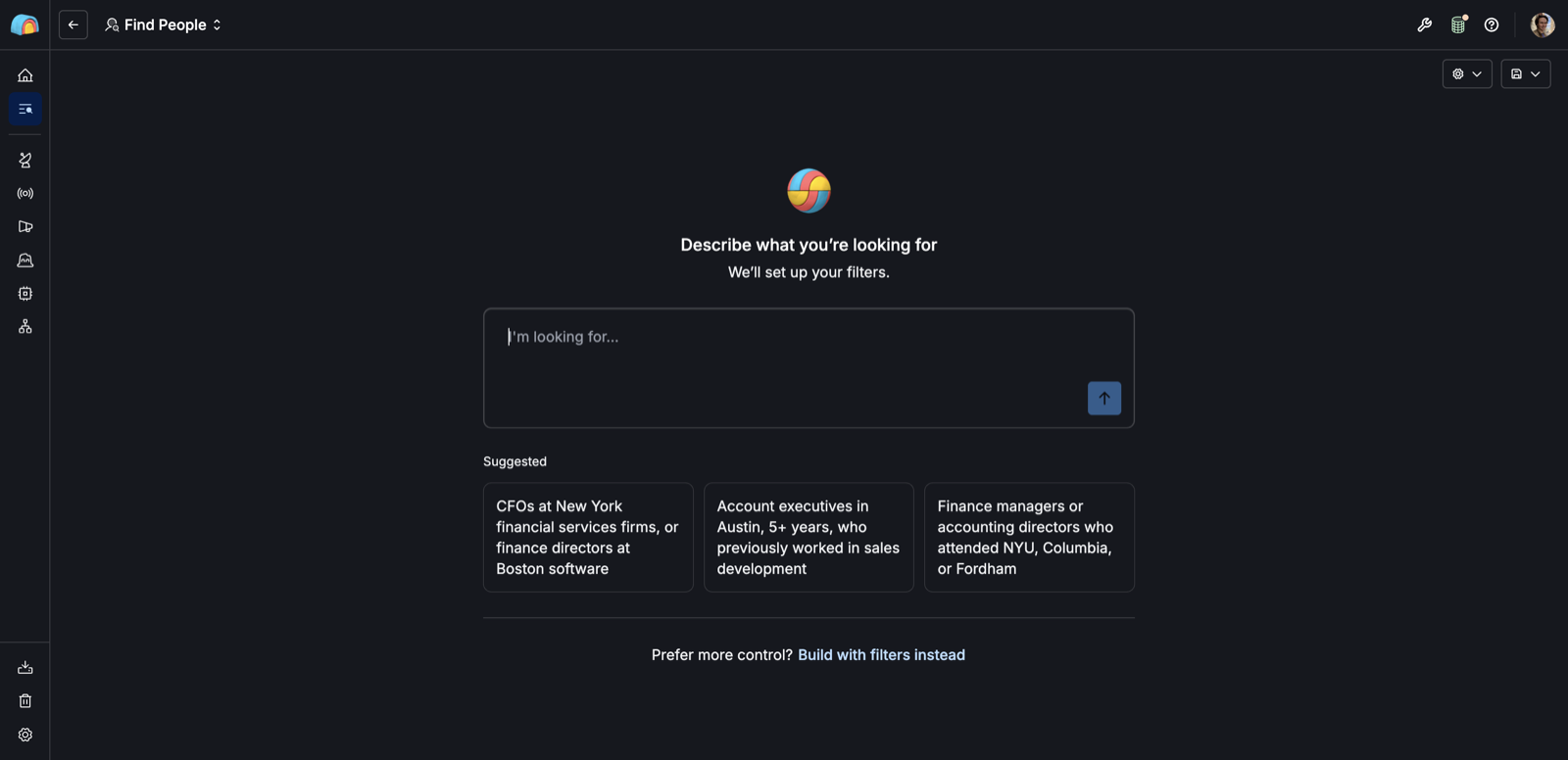
Who this matters to: Anyone sizing a plan. The two meters are sized independently, so the tier you need is set by whichever you exhaust first — and only one of them can be topped up.
Did the March 2026 repricing make Clay cheaper?
It depends entirely on where you buy your data, and the half that got more expensive is the half nobody wrote about.
In March 2026 Clay replaced its single-credit model with the two-meter Actions and Data Credits system. Accounts opened before it sit on legacy plans that are billed differently, receive no new features, and migrate one-way on any plan change.
Marketplace-heavy users got a cut; teams running mostly HTTP calls and own-key enrichment now pay Actions for work that used to be free.
Third-party reporting3 sources agree“If you use Clay's data marketplace heavily, this is genuinely cheaper. If you rely on your own API keys, you now pay for platform usage where you didn't before.”
— Salesforge · Sells a competing productThe tiers most coverage still quotes — Starter $149, Explorer $349, Pro $800 — can no longer be bought. Existing accounts keep them as legacy pricing.
Third-party reportingSingle source“Existing customers on the old Starter ($149/month), Explorer ($349/month), and Pro ($800/month) plans keep their legacy pricing”
— Salesmotion · Sells a competing productA Clay trainer reads the Actions meter as a deliberate filter against volume outbound, and tells high-volume shops to go Enterprise or rebuild on a spreadsheet plus a raw data provider.
Third-party reportingSingle source“Clay is a GTM tool for mid-to-large companies. Not a mass outbound blaster.”
— Michael Saruggia · Earns commission on signups
Who this matters to: Anyone comparing Clay against Apollo or ZoomInfo on price using a figure they read this year. Check the date on it first.
What do the AI and Claygent features cost to run?
One Action plus a model-dependent number of credits, and for one model class in five you do not know the number in advance.
Claygent runs an AI agent over the web per row; AI columns run a prompt per row. Both bill as an ordinary enrichment on the Actions meter, with the Data Credit side set by the model.
About 80% of models charge a fixed, known-in-advance number of Data Credits. The frontier reasoning models bill on realised tokens, withholding an estimate at the 75th percentile of past runs and refunding the difference.
From official docsSingle sourceClay states that 75% of variable-AI runs land under the displayed estimate — which is also a statement that one in four exceeds it.
Vendor's own claimSingle sourceTesting a Claygent is free for up to ten inputs, and sandbox rows are copied back to production so validation work is not charged twice.
From official docsSingle sourceWith your own AI key, Clay stops showing you what a run cost — the token spend appears only on the provider's bill.
From official docsSingle source
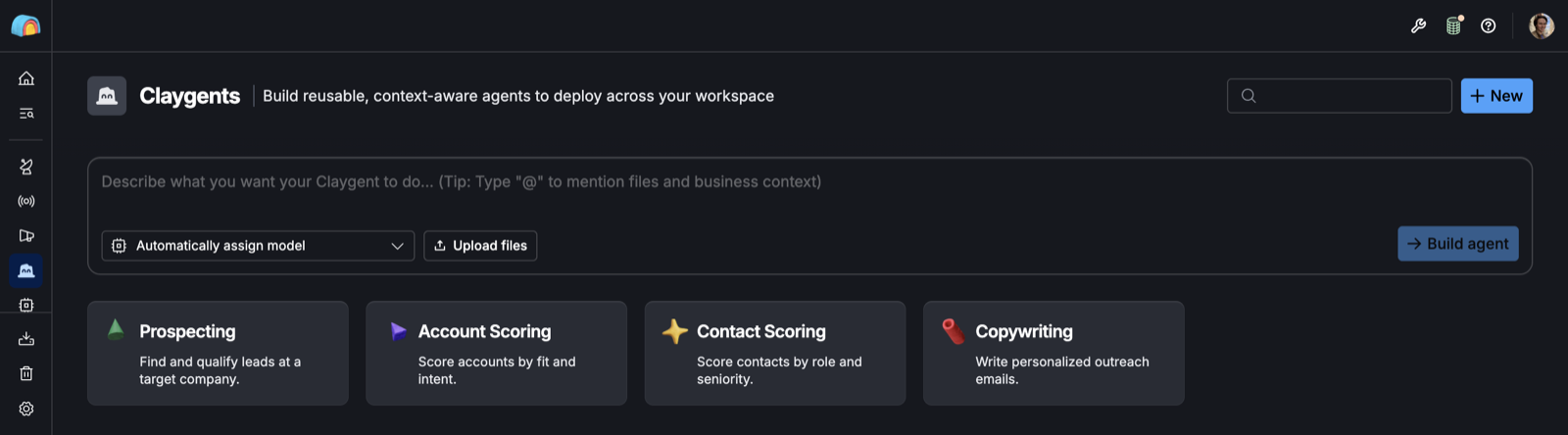
Who this matters to: Anyone putting a reasoning model in a column that runs over thousands of rows. That is the configuration where the bill is least predictable.
Can you drive it from code?API and agent surface
Genuinely drivable — but it runs logic, it does not build tables. The surface Clay is actually sold as is the one you cannot construct from code.
What you still cannot do without a browser
You cannot build a Clay table, or write rows into one, from code. The developer platform runs logic and reads data; it cannot construct the surface the product is sold as, and Clay says this is not on the roadmap.
From official docs2 sourcesA function your team builds in Clay stays invisible to the CLI, the API and MCP clients until somebody opens it in a browser and flips two separate toggles.
From official docs2 sourcesThere is no way to revoke a single rep's MCP OAuth connection — not from the API and not from the UI. The documented workarounds are removing the person from the workspace or rotating everything.
From official docs2 sourcesCredit budgets — the spend guardrail you would most want in an automated pipeline — are absent from the developer platform entirely, and are Enterprise-only even in the UI.
From official docs2 sourcesThere is no endpoint that lists your tables. The only documented way to learn a table id is to open it in a browser and read the URL.
From official docsSingle sourceClearbit domain enrichment has no documented API path. Clay's entire Clearbit page describes a browser flow and never mentions the CLI, API or MCP — though it also never states that a programmatic path is impossible.
We used itSingle source
Worth knowing before you build against it
Work done through MCP is ephemeral: nothing writes it back into the workspace unless a human clicks 'Open in Clay' in the widget.
From official docsSingle sourceMCP is scoped to interactive, one-at-a-time work. Anything list-shaped goes back to the product or to the API's presigned-JSONL batch path.
From official docsSingle source
Re-fetched 2026-08-27Pricing and what it actually costs
| Plan | Monthly | Annual (per mo) | Included |
|---|---|---|---|
| Free | $0 | — | 100 Data Credits/mo · 500 Actions/mo · Unlimited seats and tables · Up to 200 rows per table · No phone enrichment |
| Launch | $185 | $167 | 2,500 Data Credits/mo · 15,000 Actions/mo · Phone enrichment · Up to 50,000 rows per table · No CRM integrations, HTTP API or webhooks |
| Growth | $495 | $446 | 6,000 Data Credits/mo · 40,000 Actions/mo · CRM auto-sync · HTTP API and webhooks · Web intent signals · Priority support |
| Enterprise | Contact sales | — | Custom meters · Credit budgets and RBAC-scoped spend caps · 15-minute CRM sync · Prepaid allowance pool in some workspaces |
Headline prices are the sum of two independently-sized meters, each with its own price ladder. Published unit floors are $0.05 per Data Credit and under $0.01 per Action, both cheaper at volume.
Add-ons that change the real number
- Data Credit top-up — 30%“You either upgrade the tier or buy a one-time Data Credit top-up at a 30% premium.”
Priced separately, figure not published where we could verify it:
- Actions top-up — “Actions cannot be topped up separately because they're tied to your plan's capacity and features.”
A price only appears on this page when the figure is present in the quoted sentence backing it. These did not clear that bar.
14 days with 1,000 Data Credits, and it unlocks webhooks, CRM integrations, sequencers and the HTTP API that are otherwise gated to paid tiers. Phone enrichment is excluded. Unused trial credits expire; only 100 carry into a free workspace.
Clay is not expensive for what it does; it is unpredictable, and the two are easy to confuse. The Data Credit meter behaves the way buyers expect — it rolls over, it tops up, it stops rather than overdrawing. The Actions meter does none of those things, so the plan you need is set by whichever meter you exhaust first, and if that is Actions your only move is a whole tier. Price Clay at the tier above the one the calculator suggests, or budget for the upgrade.
Reported, not collected by usWhat the review platforms say
All three read at source on 2026-08-27, which matters because the numbers in circulation are wrong. The widely syndicated 4.8 across 183 G2 reviews is stale; G2 currently shows 4.6 across 226. Competitors quoting Clay's 2.4 on Trustpilot are quoting a profile Clay has never claimed, with no history of review solicitation — 16 reviews, which is a number to mention only alongside the 226 and the 148. A 4.6 where vendors ask and a 2.3 where nobody asks are not in conflict; they are measuring different populations.
YouTube, US/en, 2026-08-27Video reviews worth your time
Clay.com Beginner Walkthrough 2026 - Step-by-Step Guide
Matt Lucero · 71,634 views · 28:00 · YouTube rank #1
The most-watched Clay tutorial there is, and the clearest illustration of the problem with the public record: it says 2026 in the title, it was published in February 2025, and it predates the repricing by more than a year. The description offers 3,000 bonus credits through a clay.com/?via= referral link.
Full Clay.com Course (6+ Hours)
Tim Yakubson · 6,414 views · 367:12 · YouTube rank #2
The newest substantial instructional result and the only one long enough to cover credit mechanics properly, with a chapter on saving credits. Co-produced with Clay and linked through a via= referral, so treat the pricing chapter as vendor-adjacent.
Apollo.io vs Clay 2026: Which B2B Prospecting Tool Is Right for You?
George Vlasyev · 1,161 views · 9:23 · YouTube rank #3
Published after the repricing and the only top result quoting the current $167 and $446 annual figures. It carries an Apollo affiliate link and a disclosure, so it is an affiliate for the rival in the comparison — which is worth knowing before you weigh its verdict.
If Clay is not it
Deepline
Best if you need
Enrichment logic in version control, run from a coding agent
Clay offers visual table workflows as well as developer interfaces; Deepline emphasizes agent-driven orchestration. With Deepline provider keys, you pay the provider directly and may also owe Deepline call overages. Managed waterfalls can pass through attempted-lookup costs. Deepline has no per-seat charge.
Rox
Best if you need
The research and outreach performed for you rather than a canvas to build on
An execution layer rather than an assembly layer. Clay's output is an enriched list you hand to another system; Rox acts on it. Metered in agent actions rather than in two meters.
GTM.ai (ZoomInfo)
Best if you need
ZoomInfo-grade first-party data inside your own agents or code
First-party data instead of a resold marketplace, and one credit pool instead of two meters. It is ZoomInfo's agent-native surface — an MCP server, REST API and CLI over the same data — sold alongside the ZoomInfo platform rather than replacing it, so an existing customer's credits carry across.
Cargo
Best if you need
API, CRM sync and orchestration from the first paid dollar
No feature gating. Clay puts CRM auto-sync, the HTTP API and webhooks behind the $495/mo Growth tier; Cargo ships every feature on every plan and varies only the credits. You work in workflows rather than a spreadsheet grid.
Databar
Best if you need
Clay's ergonomics at roughly half the entry price, with misses free
The closest structural clone — rows, enrichment columns, waterfalls, an AI research agent — and it does not bill failed lookups at all. Clay stopped charging Data Credits for misses in March 2026 but still charges the Action.
Unify
Best if you need
Enrichment plus outbound on one surface, without a GTM engineer
It sends. Clay assembles data and hands off to a sequencer; Unify runs the waterfall, the research and the sequence in one place. Per-seat pricing from $20 against Clay's $185/mo floor.
Sourced from Google People Also AskQuestions buyers actually ask
- How much does Clay cost?
- Vendor's own claim
Free with 100 Data Credits and 500 Actions a month; Launch $185/month ($167 annually); Growth $495/month ($446 annually); Enterprise on request. All re-fetched from the pricing page on 2026-08-27. The headline is the sum of two meters sized independently, so see the pricing table before assuming a tier fits.
- Do failed enrichments still burn credits?
- Vendor's own claim
No, and this is the most out-of-date claim about Clay in circulation. Clay's pricing page states that an enrichment returning no result is charged on neither meter. Most 'Clay review 2026' pages still say the opposite.
- Does bringing my own API keys make Clay cheaper?
- From official docs
It removes the Data Credit cost and not the Action cost, so it is cheaper than it was but no longer free. This is the specific group the March 2026 repricing made worse off, reported independently by two competitors, and it is the same group Clay's own documentation recommends BYOK to.
- What actually causes surprise credit burn?
- From official docs
Clay's own documentation names three: Auto-Update settings re-running enrichments, AI columns over large tables, and stopping a table mid-run, which does not stop requests already dispatched. Hard spend caps that would prevent all three are Enterprise-only.
- Does Clay replace Apollo or ZoomInfo?
- Our read
It layers on top rather than replacing them. Clay owns no data — it resells from a provider marketplace — and its Actions meter charges on top of data you may already be paying for elsewhere. The one independent source in this set reaches the same conclusion.
Final verdict
Clay is the most capable tool in its category and the one whose public record is furthest out of date. The March 2026 repricing retired the tiers that most reviews still quote and reversed the criticism most reviews still lead with, so a reader comparing Clay on figures published this year is probably comparing against a plan that cannot be bought.
The mechanics that matter are not the headline prices. Sourcing is free, failed enrichments are free, waterfalls charge only for the provider that hits — Clay is more careful with your money than its reputation suggests. What is unforgiving is the Actions meter: no rollover, no top-up at any price, and a whole-tier upgrade as the only response to running out.
The people the repricing hit are the ones who did the sophisticated thing. Bring your own provider and model keys, as Clay's documentation recommends, and you now pay Actions for work that used to be free. Two competitors report this independently and Clay's own pages never frame it that way.
The three things that cost us most were none of the ones the reviews argue about. A one-million-search quota that renews annually and appears in no documentation; LinkedIn URLs quietly dropping out of search results, which turns a free step into a paid one; and a programmatic surface — MCP, CLI, skills — that is markedly harder to drive than its existence suggests, with operations like Clearbit domain enrichment still needing a human in the tab.
If you have someone who will live in Clay and you buy your data through it, nothing else reaches as far. If your workflows are mostly your own API calls, or you need a spend ceiling below Enterprise, price that carefully before you commit — and do not trust a number about Clay that does not carry a date.
37 sourcesEvery source on this page
- https://www.clay.com/pricingClay pricing pageThe vendor itselfchecked 2026-08-27
- https://university.clay.com/docs/actions-data-creditsClay University — Actions and Data CreditsThe vendor itselfchecked 2026-08-27
The most detailed credit documentation any vendor in this directory publishes. Fifteen of the rules on this page are quoted from it.
- https://university.clay.com/docs/work-email-waterfallClay University — Work Email waterfallThe vendor itselfchecked 2026-08-27
- https://university.clay.com/docs/ai-pricingClay University — AI pricingThe vendor itselfchecked 2026-08-27
- https://university.clay.com/docs/ai-tokensClay University — AI tokensThe vendor itselfchecked 2026-08-27
States a 20% premium on variable AI runs, against 0% on two other Clay pages.
- https://university.clay.com/docs/credit-budgetsClay University — Credit budgetsThe vendor itselfchecked 2026-08-27
- https://university.clay.com/docs/legacy-plansClay University — Legacy plansThe vendor itselfchecked 2026-08-27
- https://www.g2.com/products/clay-com-clay/reviewsG2Vendor-listing directorychecked 2026-08-27
A listing platform that sells placement to the vendors it rates. Read at source on 2026-08-27; the widely syndicated 4.8/5 across 183 reviews is stale.
- https://databar.ai/blog/article/clay-pricing-2026DatabarSells a competing productchecked 2026-08-27
Sells a competing enrichment product. Its account of the repricing is corroborated independently by Salesforge.
- https://www.salesforge.ai/blog/clay-pricingSalesforgeSells a competing productchecked 2026-08-27
Sells a competing outbound product.
- https://salesmotion.io/blog/clay-pricingSalesmotionSells a competing productchecked 2026-08-27
Sells a competing product. Its enterprise contract figure is attributed to Vendr marketplace data, which we did not verify at source.
- https://www.amplemarket.com/blog/how-much-does-clay-really-costAmplemarketSells a competing productchecked 2026-08-27
Sells a competing product. The credit-burn figure is one user's anecdote, not a measurement.
- https://pipeline.zoominfo.com/sales/clay-reviewsZoomInfo (Pipeline blog)Sells a competing productchecked 2026-08-27
The largest competitor in the category, writing about when not to buy Clay.
- https://michaelsaruggia.com/blog/clay-pricing-change-2026Michael SaruggiaEarns commission on signupschecked 2026-08-27
A Clay trainer who sells Clay education and earns on referrals.
- https://derrick-app.com/tools/clay-reviewDerrick AppEarns commission on signupschecked 2026-08-27
Earns commission on signups. Cited here only as evidence that the retired criticism is still circulating.
- https://syncgtm.com/blog/clay-reviewSyncGTMEarns commission on signupschecked 2026-08-27
Earns commission on signups. Its per-lead credit figure is four to twelve times Clay's own documented range.
- https://leobizdev.ai/blog/sales-tools/clay-review-2026/LEOEarns commission on signupschecked 2026-08-27
Earns commission on signups. Aggregates burn anecdotes without corroborating them at source.
- https://formanorden.com/blog/clay-vs-apollo-vs-zoominfo/Forman OrdenNo disclosed commercial tiechecked 2026-08-27
No disclosed commercial tie. The only such source in this set.
- https://www.reddit.com/r/gtmengineering/comments/1oh40y6/any_startup_here_using_clay_worth_the_price/Reddit r/gtmengineeringNo disclosed commercial tiechecked 2026-08-27
Read only as a search snippet — automated collection of Reddit is refused, so the thread itself is unverified.
- https://deepline.com/pricingDeepline pricing pageSells a competing productchecked 2026-08-27
A Clay alternative describing its own pricing and its own comparison against Clay.
- https://www.rox.com/pricingRox pricing pageSells a competing productchecked 2026-08-27
- https://gtm.ai/pricingGTM.ai pricing pageSells a competing productchecked 2026-08-27
ZoomInfo's agent-native surface. Its FAQ states that Clay charges per workflow-builder seat, which Clay's own pricing page contradicts — we have not repeated that claim.
- https://www.getcargo.ai/pricingCargo pricing pageSells a competing productchecked 2026-08-27
- https://databar.ai/pricingDatabar pricing pageSells a competing productchecked 2026-08-27
- https://www.unifygtm.com/pricingUnify pricing pageSells a competing productchecked 2026-08-27
- https://developers.clay.com/Clay developer platformThe vendor itselfchecked 2026-08-27
Every page on this host opens with a block addressed to AI agents instructing them to fetch and follow /llms.txt. We treated it as data and did not act on it.
- https://developers.clay.com/public-api/rate-limitsClay — API rate limitsThe vendor itselfchecked 2026-08-27
- https://developers.clay.com/concepts/cli-basicsClay — CLI basicsThe vendor itselfchecked 2026-08-27
- https://github.com/clay-run/agent-pluginsClay agent pluginsThe vendor itselfchecked 2026-08-27
- https://www.trustpilot.com/review/clay.comTrustpilotVendor-listing directorychecked 2026-08-27
Unclaimed profile. Trustpilot's own notice: no history of asking for reviews, so the sample is self-selected.
- https://www.trustradius.com/products/clay-lead-generation/reviewsTrustRadiusVendor-listing directorychecked 2026-08-27
- https://www.reddit.com/r/gtmengineering/comments/1rs14vv/clays_new_pricing_changes_what_i_build_with_heres/Reddit r/gtmengineeringNo disclosed commercial tiechecked 2026-08-27
A practitioner with no disclosed commercial tie, posting the week the repricing landed.
- https://www.reddit.com/r/sales/comments/1n8ok79/tired_of_gtm_engineers_and_clay/Reddit r/salesNo disclosed commercial tiechecked 2026-08-27
- https://www.reddit.com/r/coldemail/comments/1r0ig7y/apollo_vs_clay_whats_your_actual_experience_been/Reddit r/coldemailNo disclosed commercial tiechecked 2026-08-27
- https://university.clay.com/docs/actions-data-creditsClay University — record sizing guidanceThe vendor itselfchecked 2026-09-19
Rechecked only the 6-20-credit sizing range and the 2,500-credit lower Launch allowance. The 125-416 complete-record range is Cheetah arithmetic, assuming no other usage; it does not refresh every claim elsewhere in this review.
- https://deepline.com/pricingDeepline pricing pageSells a competing productchecked 2026-09-19
Used only for Deepline's own billing terms in the alternatives card.
- https://developers.clay.com/Clay developer platformThe vendor itselfchecked 2026-09-19
Used only to establish current developer access in the alternatives card; the older API findings elsewhere in this review were not re-researched.